

Best pregnancy stretches for back, hip and pelvis pain
Back, hip and pelvic pain are very common during pregnancy. For some people it begins early, for others it may develop gradually as the body adapts.
At Papaya Clinic, we see this every day. In most cases, this pain reflects normal physiological changes rather than injury or damage.
Stretching can help ease muscular tension.
The aim is comfort and support, not pushing or forcing movement.
Why these areas often become painful
Pregnancy changes how the body moves and carries load. Your centre of gravity shifts forward. Your rib cage and pelvis change position. Hormonal changes allow joints to move more freely. Muscles adapt to provide stability in new ways. Some muscles work harder and tighten while others lengthen and fatigue. Pain is often uneven, so this pattern is common and expected.
How pregnancy hormones affect stretching
During pregnancy, hormones such as relaxin increase joint and ligament laxity.
This helps the pelvis adapt for birth. It also changes how stretches feel. You may not reach your end range in the same way, or it may feel like you can’t quite get enough out of your stretch.
Your joints are already more mobile, strong or prolonged stretching can sometimes irritate tissues. Gentle, controlled stretches are usually more effective. If a stretch feels unstable, sharp, or difficult to control, ease off.
A note on safety
Stretching should feel relieving, not effortful. You should be able to breathe comfortably throughout. Avoid sharp pain, tingling, or a sense of giving way. If something does not feel right, it is not right for you in that moment.
Gentle stretches we often recommend
These stretches are commonly helpful and can be done daily.
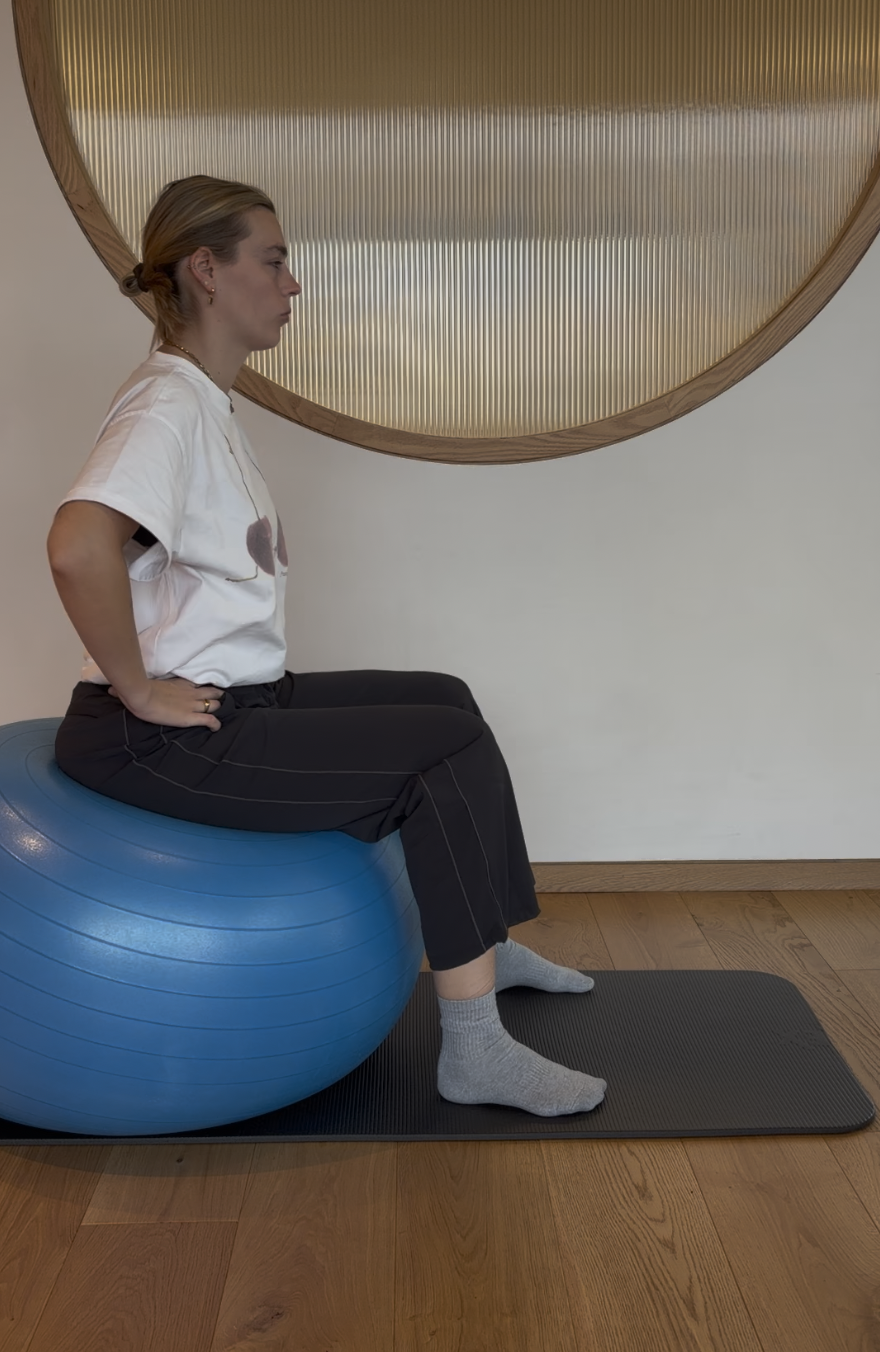
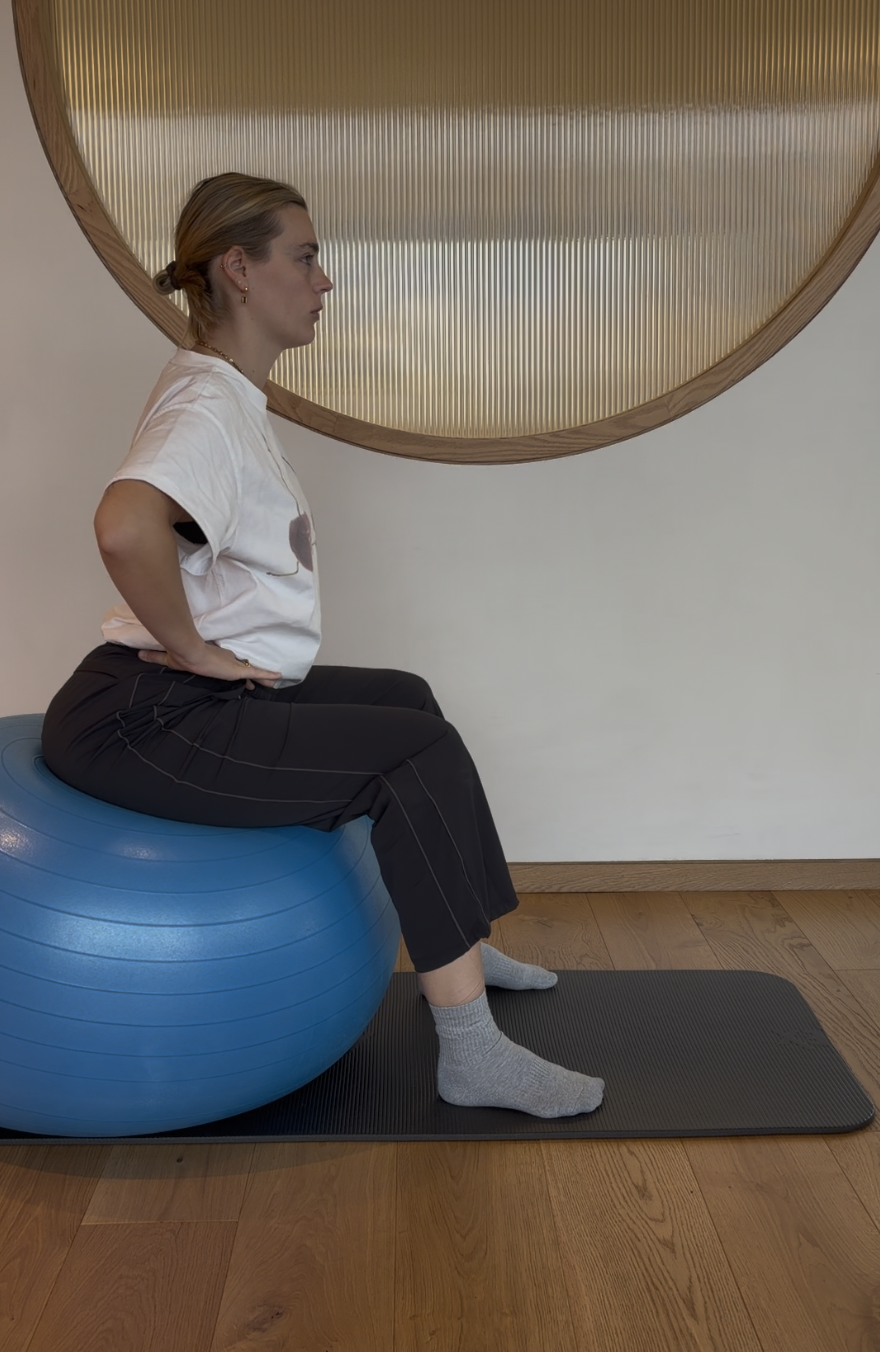
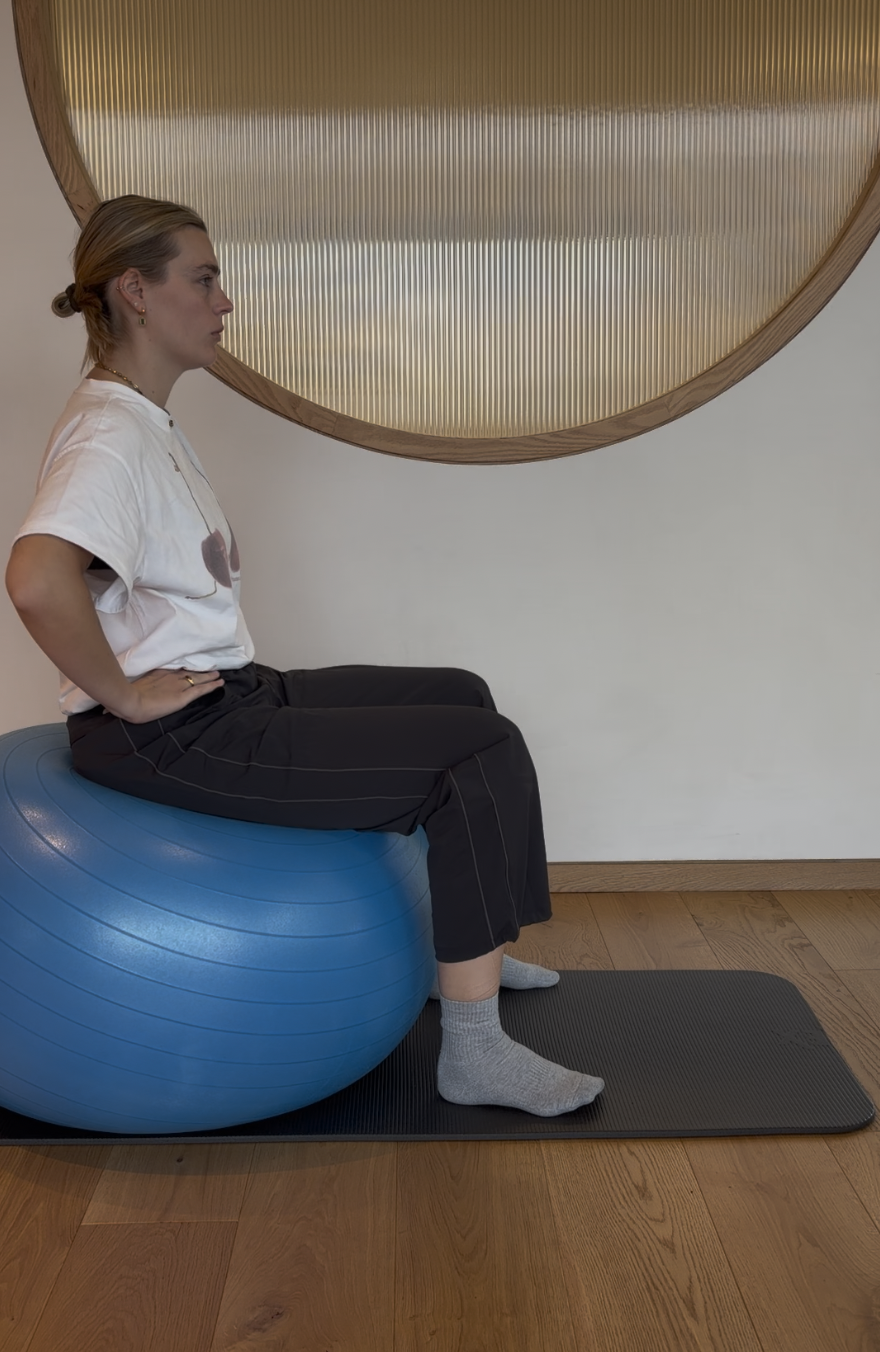
Pelvic tilts
For lower back and pelvic stiffness. This is a movement, not a deep stretch
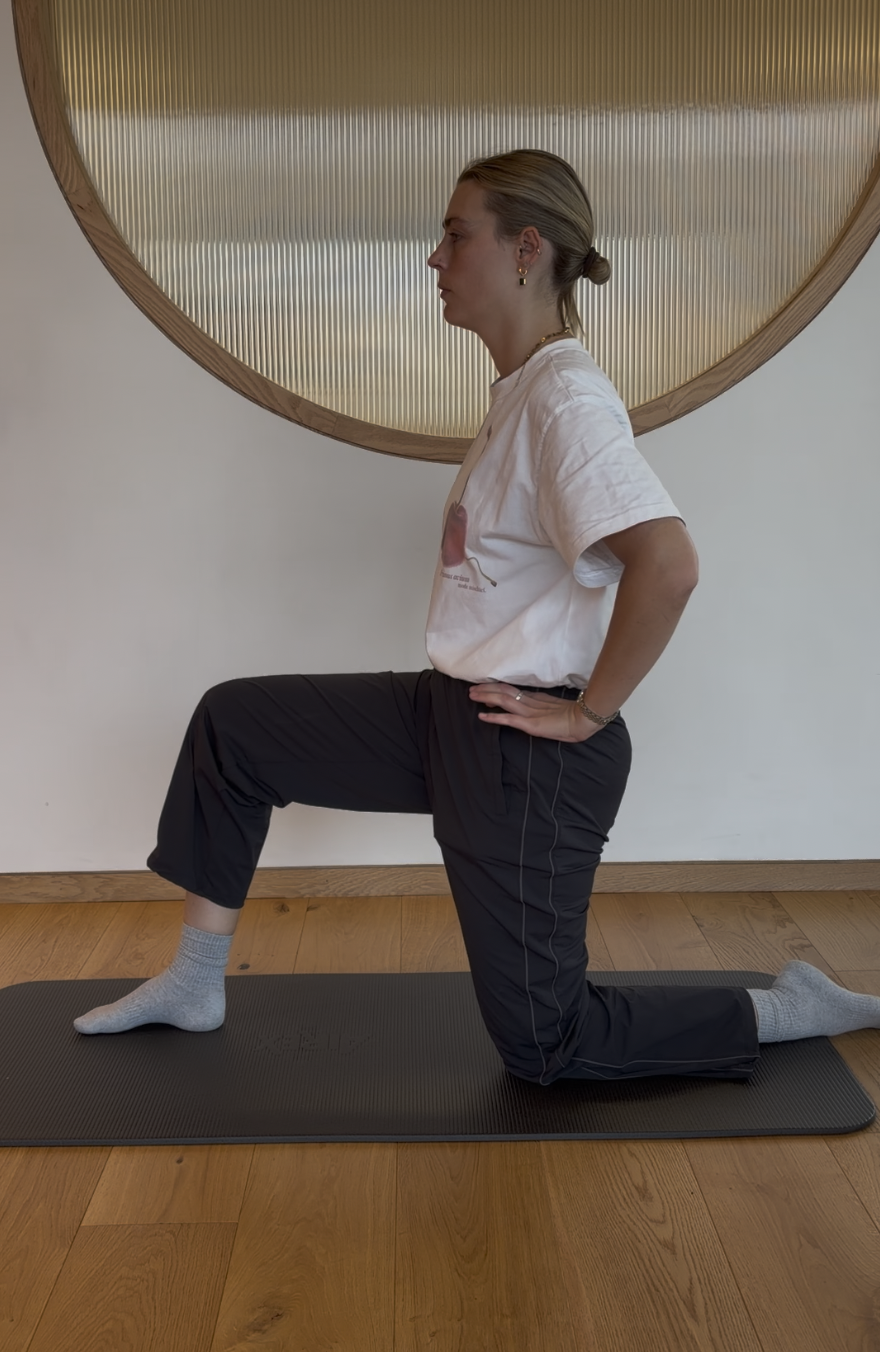
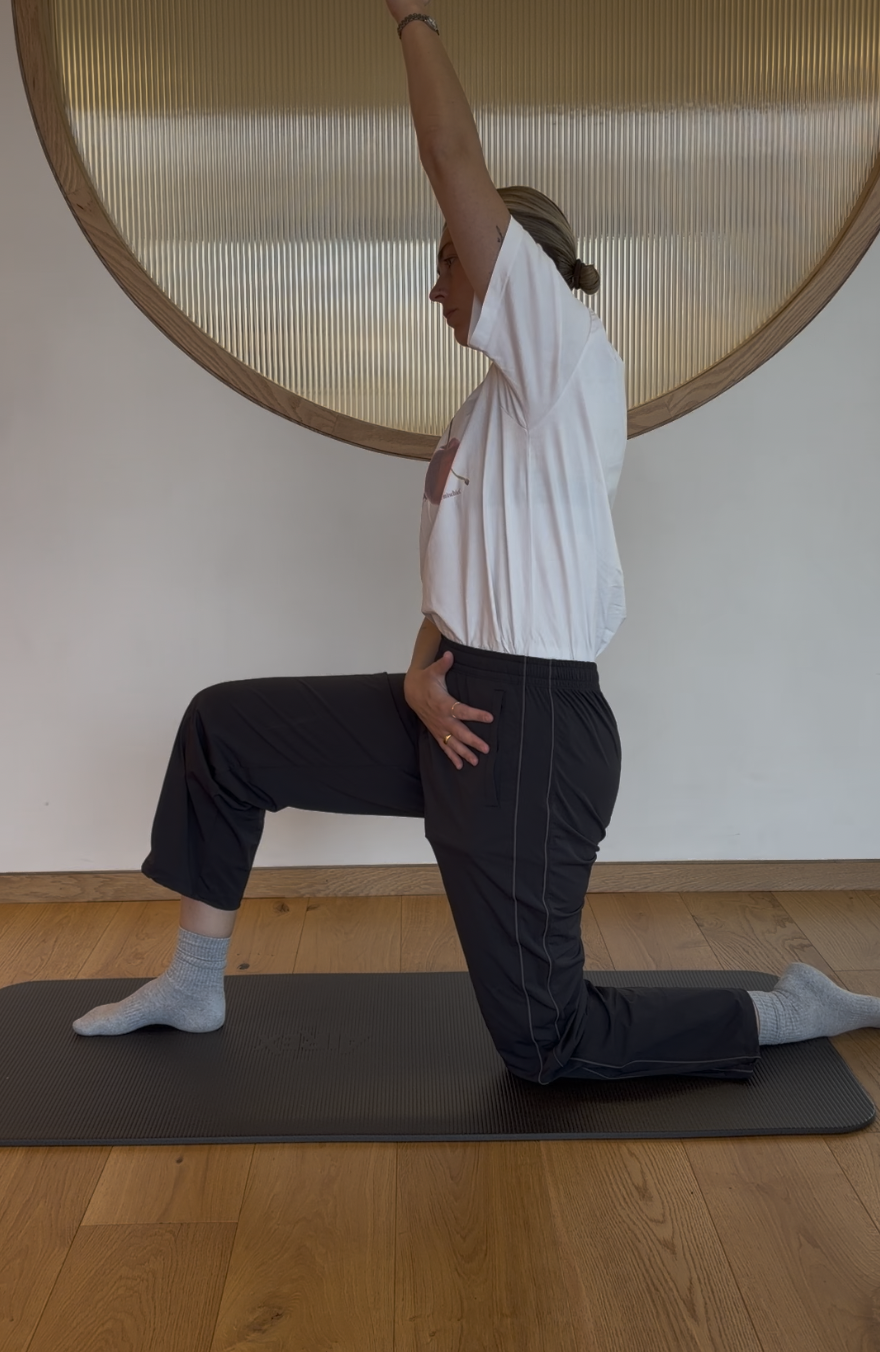
Hip flexor stretch
You should feel this stretch in the front of the hip, not the lower back.
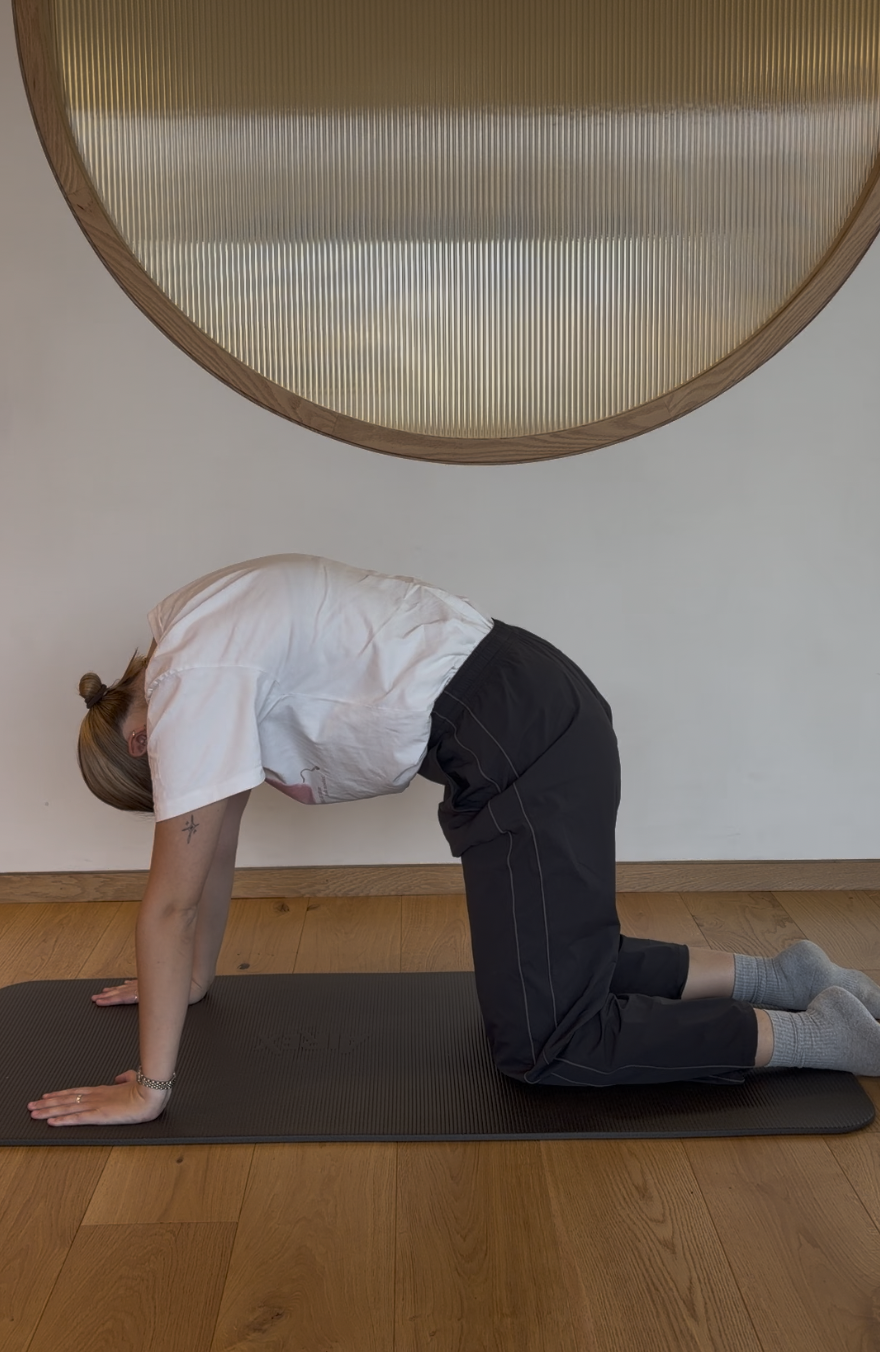
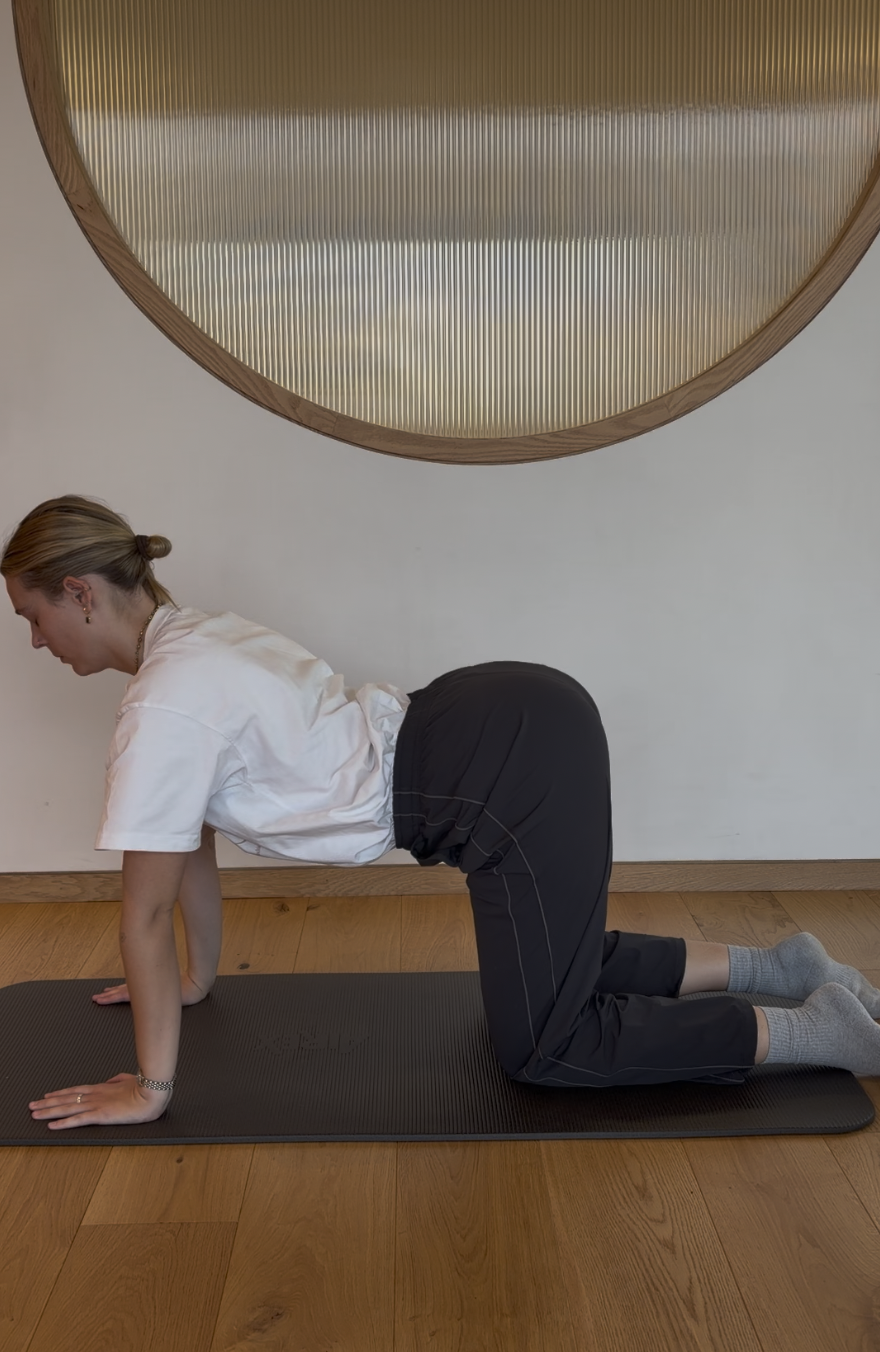
Cat cow
To encourage gentle movement in the lower back
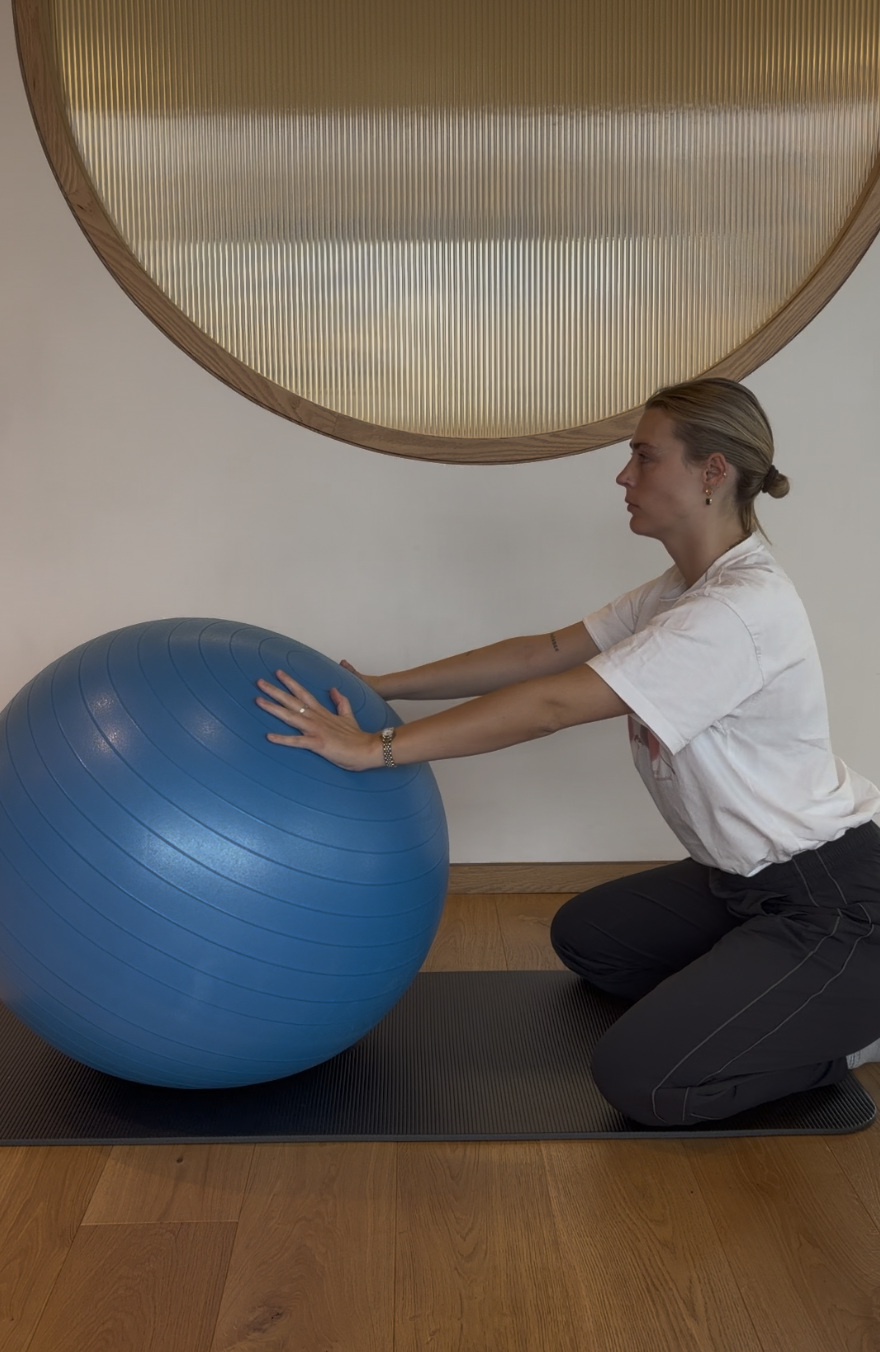
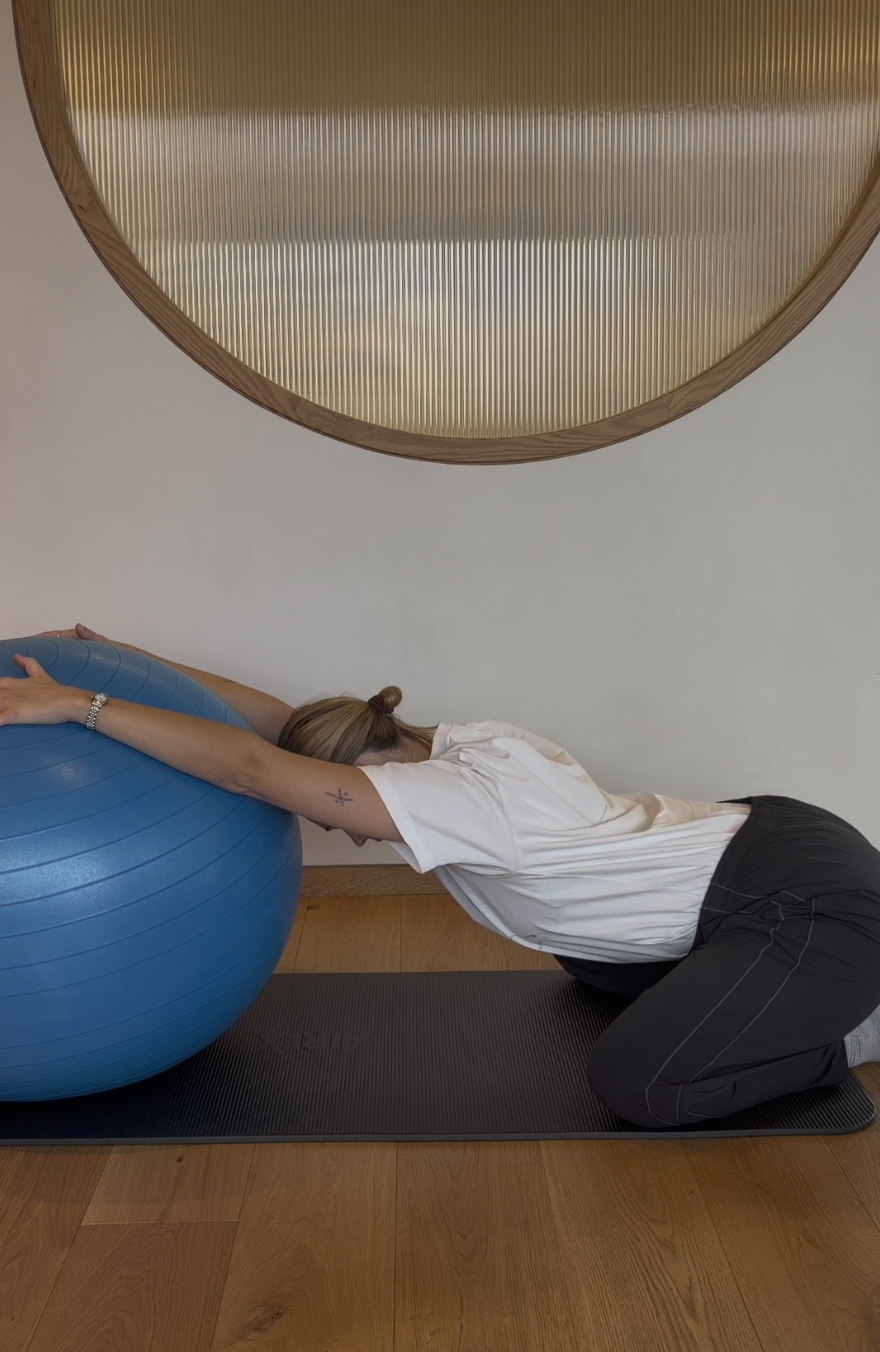
Elevated child pose
To stretch through back. Place hands on ball or elevated surface to create extra belly room
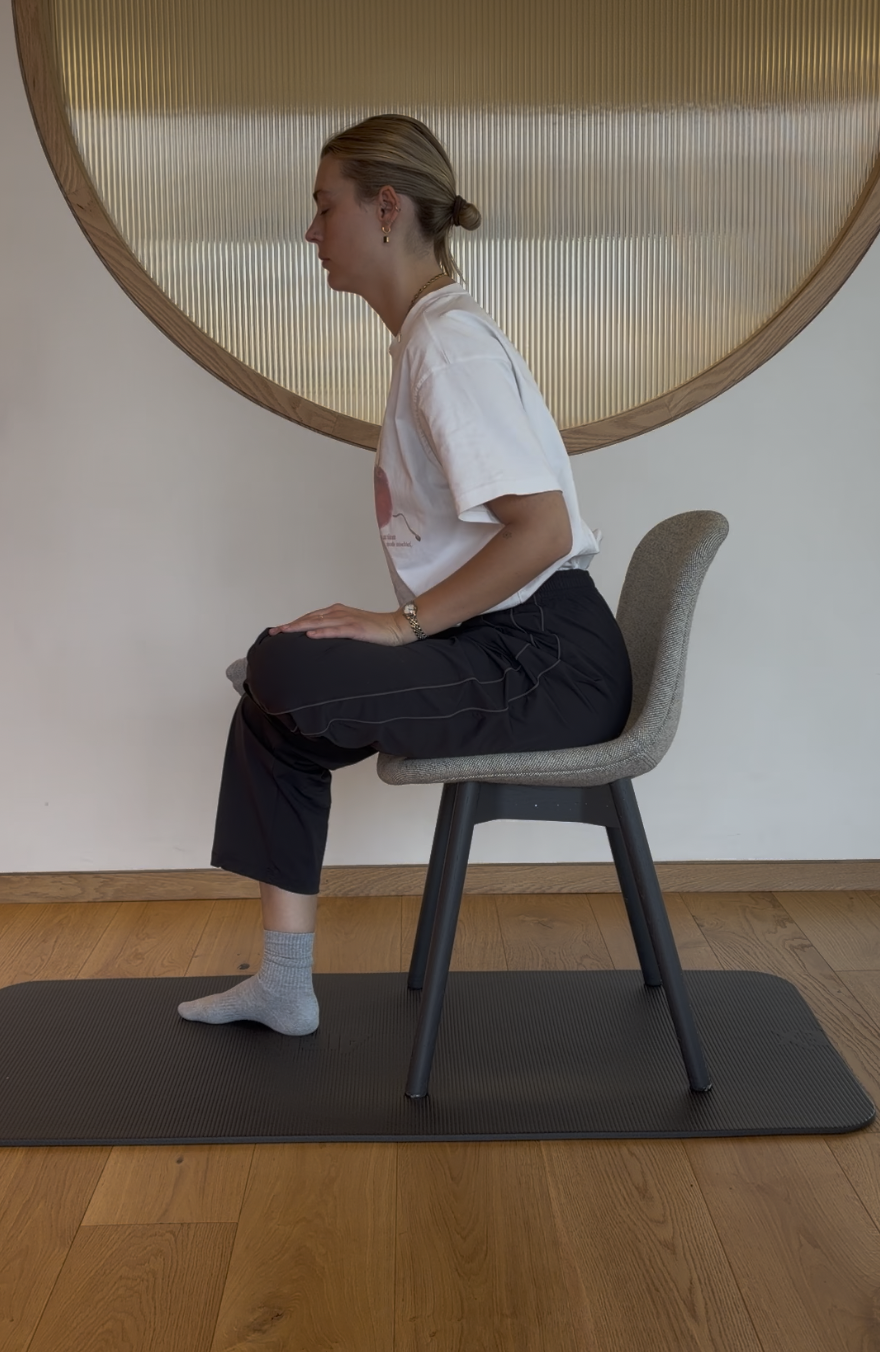
Seated glute stretch
For hip or buttock discomfort.
Stretching is part of a bigger picture
Stretching can reduce symptoms and give some short-term pain relief. It does not need to do everything and we shouldn’t expect it to. Strength, pacing, sleep positioning, and daily movement habits all matter. Understanding what is happening in your body matters too.
When extra support is useful
If pain is worsening, limiting walking, affecting sleep, or causing anxiety, individual support can help.
At Papaya Clinic, our physiotherapists assess how your body is moving and loading during pregnancy. Care is tailored to you and your stage of pregnancy.
You do not need to wait until pain becomes severe.