Are Gut Microbiome Tests Worth It?
The gut microbiome is a highly complex ecosystem of trillions of microorganisms, including bacteria, fungi, parasites, and viruses, that live primarily inside your large intestine (colon). It’s kind of like a melting pot of countless bugs and bacteria, mostly good and some bad. The vast majority of these microbes are symbiotic, meaning they coexist peacefully and perform essential bodily functions that your cells cannot achieve alone.
When there’s an imbalance in your gut microbiome, called dysbiosis, it can lead to various health issues, including skin conditions, fatigue, bloating, abdominal pain, constipation or diarrhea. The challenge lies in understanding exactly what an ‘imbalance’ is and what can be done to rectify it.
The causes of dysbiosis can include long-term antibiotics use or frequent use of medications, high levels of stress for extended period, excessive alcohol consumption, poor sleep and eating ultra-processed foods low in fibre. These things can all alter your gut microbiome significantly, particularly if multiple of these causes are combined.
Testing your gut microbiome may provide information about your gut health and enable you to act accordingly to rectify any issues. However, there is limited research supporting the efficacy of testing, with medical experts sighting various issues around test analysis, the lack of a definition of a normal or healthy gut microbiome baseline, and also the fact that your gut microbiome is incredibly complex and varies day to day and between individuals.
What is a gut microbiome test?
A gut microbiome test uses an at-home stool sample to examine the varieties and amounts of bacteria, fungi, and other microorganisms living in your digestive tract. The process involves you collecting a small stool sample using a specialised kit provided by the testing company. The sample is then sent off to a lab for testing and analysis.
What is a gut microbiome test actually measuring?
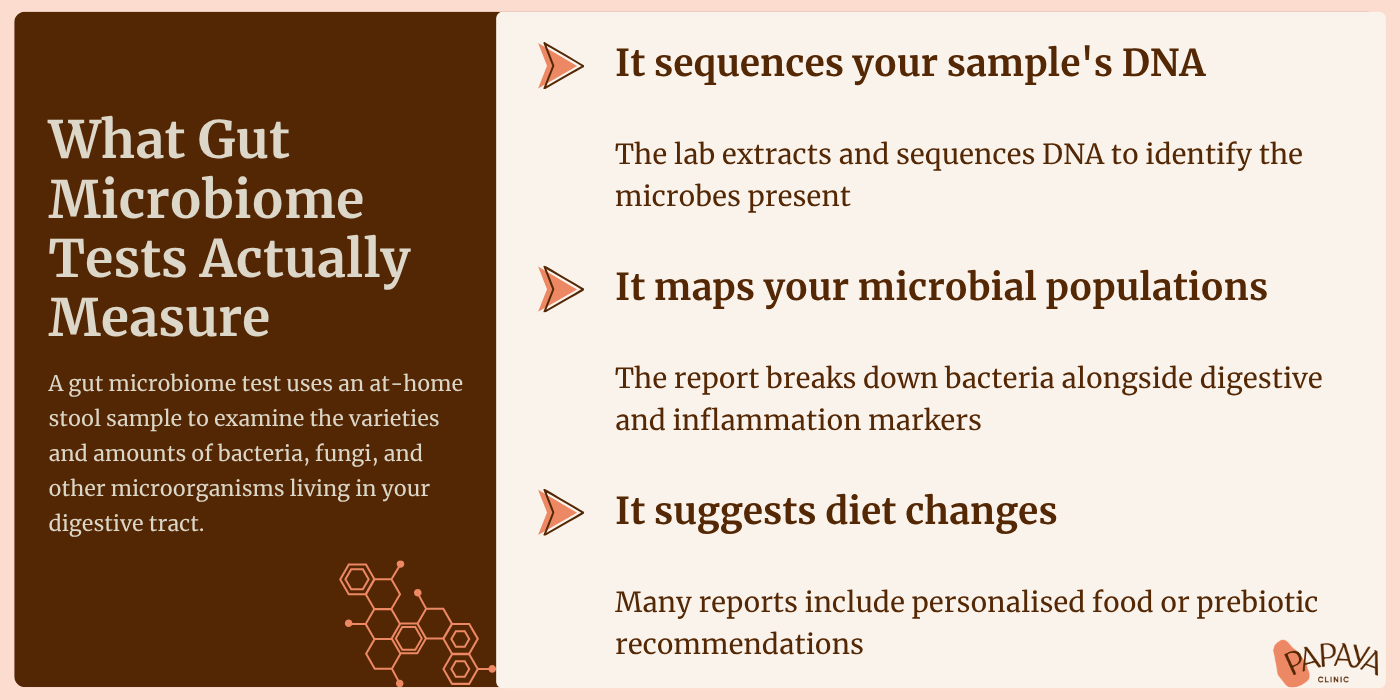
The sample you provide to the testing lab goes through a process whereby they extract DNA from the sample and sequence it to identify the microbes present. More advanced tests use shotgun metagenomics to map all microbial genes, while basic tests use targeted PCR or 16S sequencing.
After the analysis, you receive a report or ‘profile’ that breaks down your microbial populations, often alongside relevant digestive markers and inflammation indicators. The report may also have a personalised diet or recommendations for prebiotics that may help with imbalances.
When is a gut microbiome test needed?
A gut microbiome test can be useful when you have ongoing digestive or systemic symptoms that standard medical tests have been unable to diagnose. They can form part of a broader diagnostic process to help fill gaps when you have unexplained ailments, particularly if the symptoms are bloating, gas, food sensitivities, abdominal pain, diarrhea, or constipation.
If you suffer from other ailments that traditional testing can’t explain, or standard care is unable to resolve, such as chronic fatigue and skin issues, a doctor may suggest a microbiome test. Similarly, they can be advised if you have a history of long-term use of antibiotics. Keep in mind that a doctor prescribed test is very different from an at-home, direct to customer one.
What actionable insights do you get from a gut microbiome test?
One of the main challenges when understanding the results from a gut microbiome test is that while the issuing lab or specialist may suggest action be taken, the advice should be taken as recommendations, rather than absolute musts. The reason for this is that there is limited science and understanding of exactly what an ideal gut microbiome is. As such, it’s best to only make incremental changes to your diet and lifestyle, progressively modifying your food intake (assuming it’s required) and everyday behaviours.
At the end of the day, a varied, healthy diet with plenty of wholefoods and minimal processed ingredients, regular exercise, good sleep and stress reduction are all things everyone should embrace, regardless of a gut microbiome analysis.
At home vs. Clinical Testing – is there a difference?
At-home gut microbiome tests provide broad wellness insights and microbial diversity scores, whereas clinical testing is used by doctors and specialists to diagnose specific medical conditions, infections, or gastrointestinal diseases.
At-Home testing will give you an understanding of general bacterial diversity, relative abundance of microbes, and the report will sometimes offer lifestyle or diet suggestions. A clinical test that’s ordered by a doctor or specialist is performed or arranged through a healthcare provider and the sample is analysed in a certified medical laboratory. They measure specific disease biomarkers, inflammation markers, parasites, fungi, and dangerous pathogens using targeted methods.
Is a gut microbiome test actually worth doing?
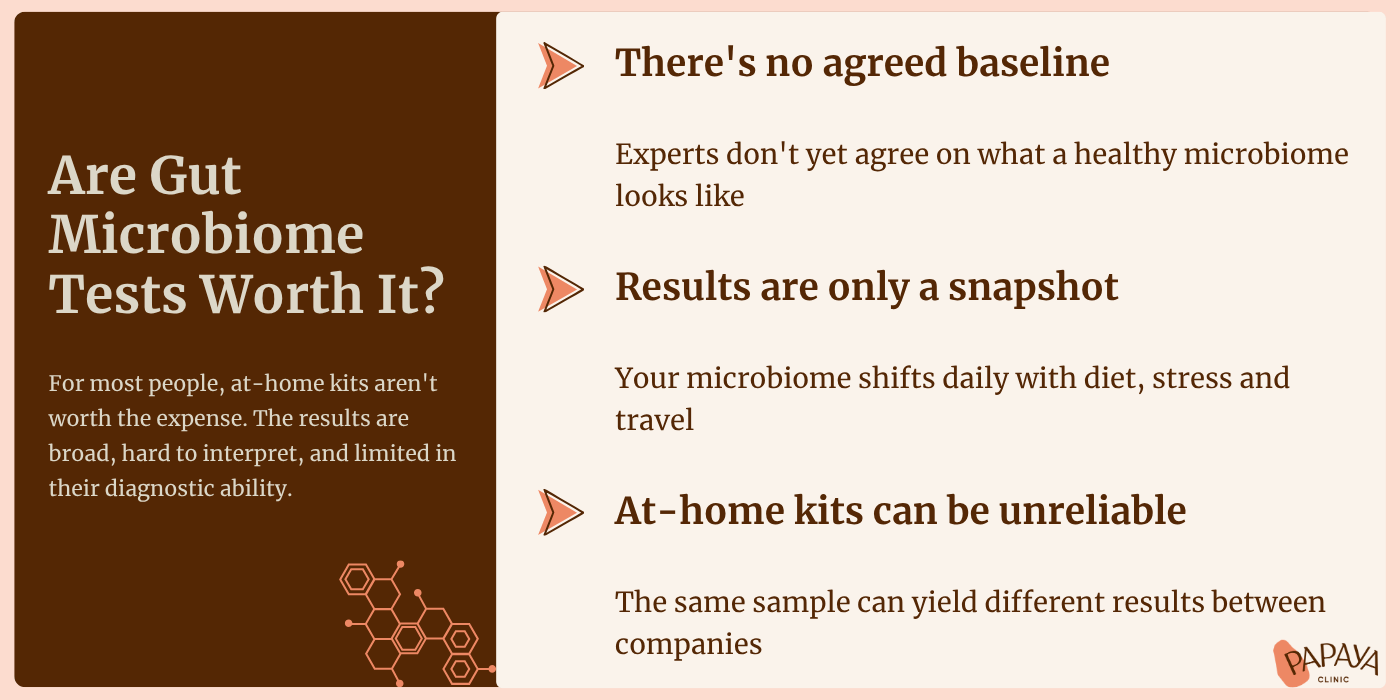
Not to be dismissive of gut microbiome tests, but the at-home kits are not worth the expense for most people. The results they provide are very broad and limited in their diagnostic ability.
Researchers and medical experts alike, do not yet agree on what a healthy or standardised gut microbiome is. This means that individual test scores from an at-home test are hard to interpret meaningfully. Part of the reason for the lack of definitive metrics is that your gut microbiome changes rapidly based on short-term factors like recent meals, exercise, hydration, stress or even travel. This means a test is only a momentary snapshot of your overall, long-term gut microbiome.
One thing research has shown is that sending the exact same stool sample to different testing companies can yield differing results. Unless the sample is being analysed at a certified medical laboratory, the results could be inaccurate and misleading.