Menopause Sleep Problems: Causes & How to Manage Sleep
Hormonal changes during menopause can have a wide array of both mental and physical effects. Some, like hot flushes, night sweats, and irritability are well documented. Others, like disruptions to sleep and temporary insomnia, are not as widely discussed or documented.
Key facts about sleep changes during menopause
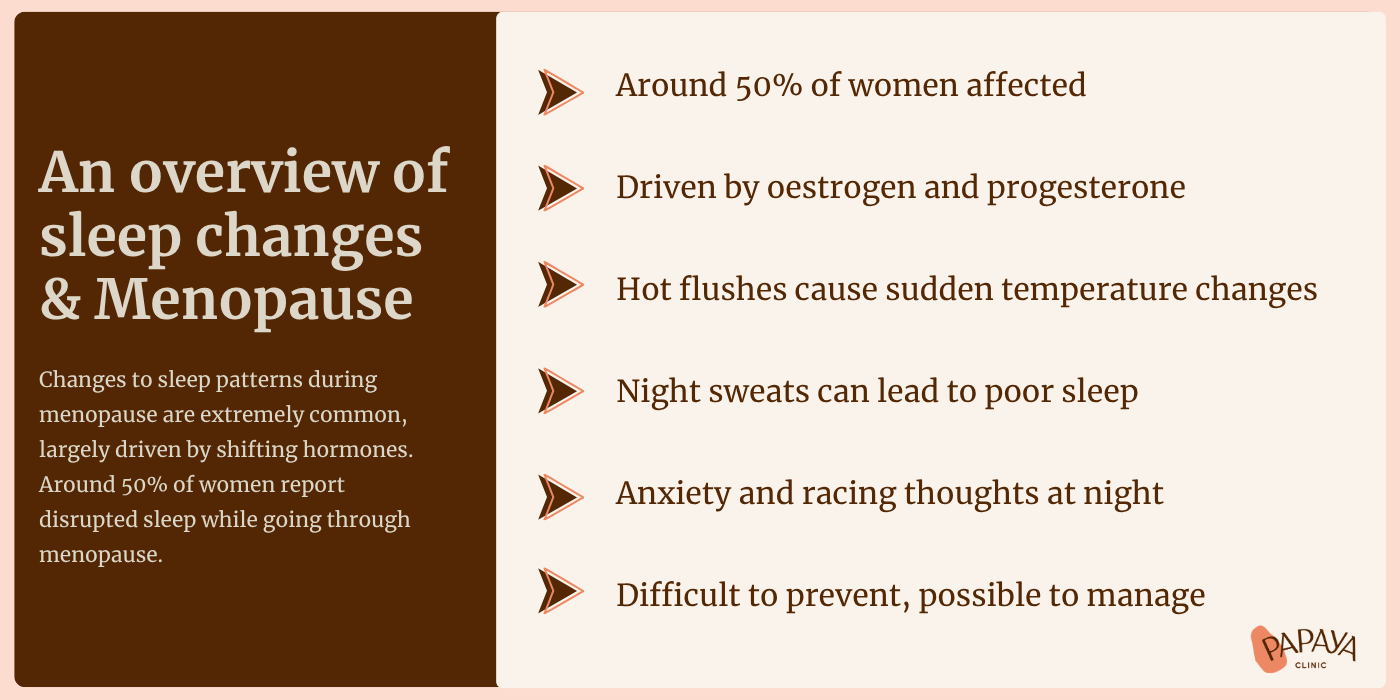
Changes to sleep pattern during menopause is extremely common
Approximately 50% of all women report disruptions to sleep or changes to their sleep pattern during menopause.
Changes to oestrogen and progesterone levels through menopause are known triggers for disrupted sleep.
Hot flushes can cause sudden changes to body temperature, evoke night sweats, and cause poor sleep.
Changing hormones can cause anxiety during menopause, changes to mood, and lead to general restlessness during the night. Many women report racing thoughts through the night and finding it hard to “switch off” at the end of the day.
Changes to sleep are largely driven by hormones. Whilst extremely difficult to prevent/navigate, there are steps that can be taken to minimise the sleep impact.
How common is disrupted sleep during menopause?
Changes to sleeping patterns are extremely common during menopause. Around 50% of women report disruptions to their normal sleeping patterns while going through menopause.
Changes to sleep during menopause are typically linked to declining oestrogen and progesterone levels, as well as the physical triggers these exhibit – namely hot flushes and night sweats.
If you are experiencing poor sleep during menopause – you are not alone. Understanding why it happens and knowing that you are not alone is the first step towards managing changes to sleep during menopause.
Practical tips to navigate changes to sleep during menopause
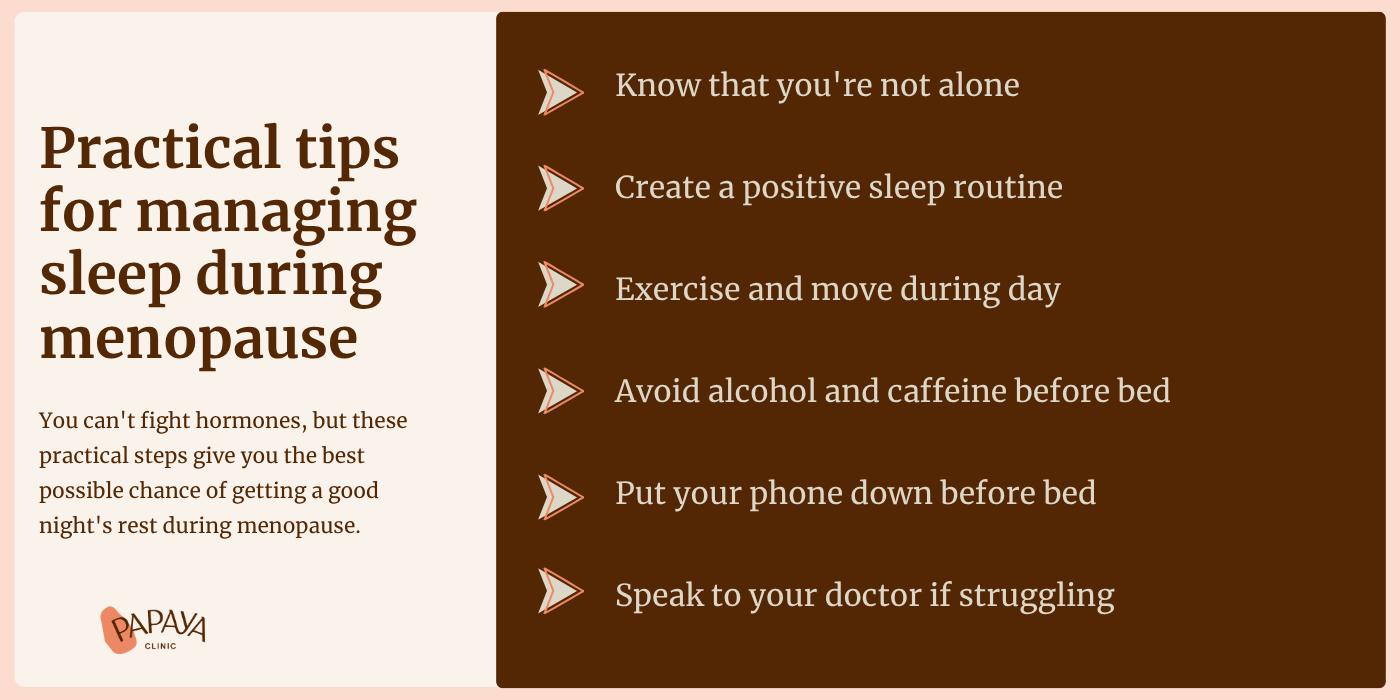
Understand you are not alone: It sounds incredibly simple – but knowing that you are not alone is extremely important. Menopause is a frightening time. Hormonal changes affect the way that we think, feel, process, as well as causing physical changes. Knowing that changes to sleep patterns is all part of it is extremely important.
Try to create a routine: We’ve heard it so many times before – not even in the context of sleep problems during menopause – but routine is the key to giving yourself the best possible chance of getting a good night’s rest. Try to get into a positive routine to help set your body clock and condition your mind for bed.
Exercise during the day: Exercise and physical activity during the day is one of the best way to fight the hormonal changes that can impact sleep. Just like trying to take the beans out of young children, going for a run, Pilates class, or any sort of physical activity is a great way to promote rest at night.
Avoid alcohol & caffeine at night: Sounds simple – but avoiding caffeine at alcohol is one of the best ways to get a good night’s rest. Consuming alcohol, coffee, or even spicy foods too close to your bed time can trigger physical changes like hot flushes, night calls to the bathroom, and dry mouth.
Avoid your phone before bed: Try to put down your phone at least 30-minutes before bed time. Scrolling right before bed can leave your mind racing and contribute to the already overwhelming hormonal changes that you’re experiencing. Some women report success with blue light glasses in the hours before bed to help with suppressing melatonin.
Speak to a doctor: If, despite your best efforts, you are still struggling to get a good night’s rest, then it’s worth speaking to a women’s health clinic, like Papaya, for menopause specific treatments. Your doctor may additionally recommend counselling or medication to help with promoting sleep during menopause. If you have exhausted all avenues, don’t be afraid to reach out to your GP for help.
Final thoughts
The most important thing to understand – and I cannot stress this enough – is that what you are feeling and experiencing is normal. Menopause is a transformative part of the female journey. At times, it can feel incredibly isolating, so it’s important to recognise that this too will pass. Yes, menopause can push you to your limit both physically and mentally – but it’s important to know that you will get through this.
You can’t fight hormones, but you can implement the steps above to give yourself the best possible chance of getting a good night’s rest. Sleep is the key to physical and mental health, so make sure that you are prioritising rest and giving yourself the good grace of patience and understanding during menopause.