
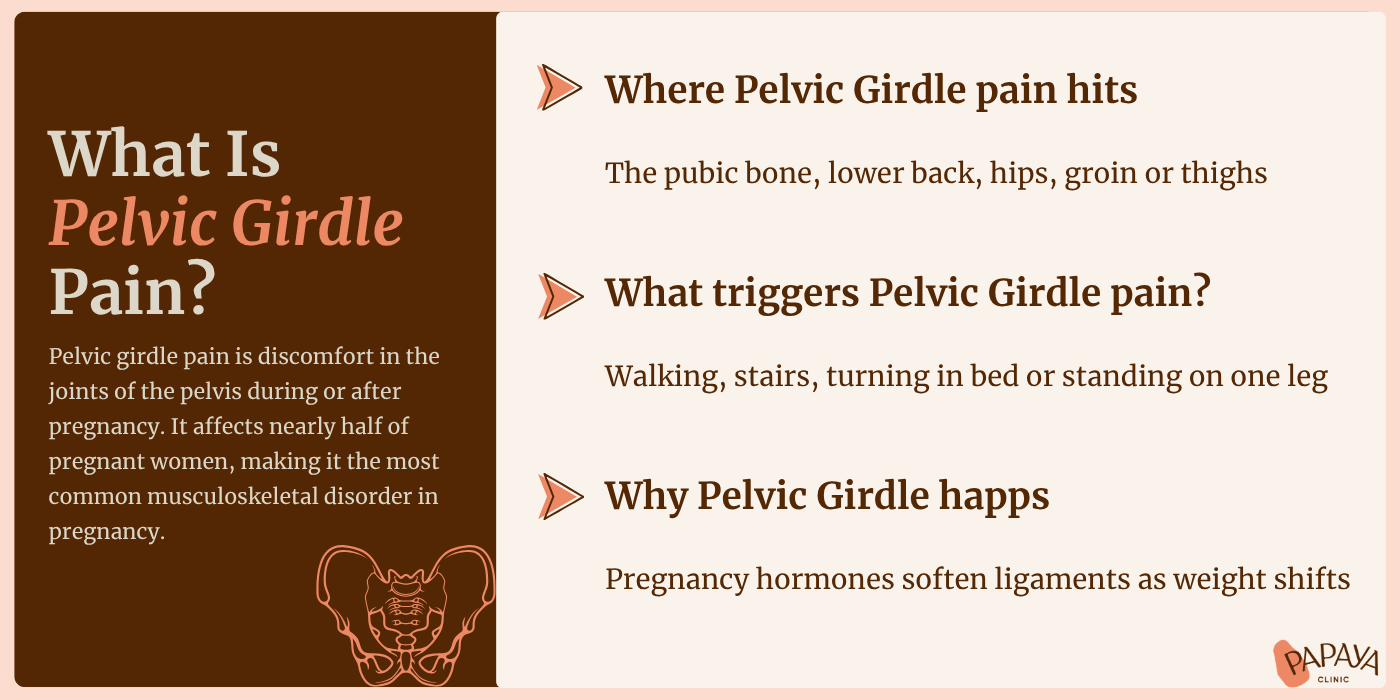
Pelvic girdle pain (PGP) is discomfort in the joints of the pelvis during or after pregnancy. According to research, it impacts nearly half of pregnant women in Australia, making it the most common musculoskeletal disorder during pregnancy.
The locations of the pain are typically in the front pubic bone, lower back, buttocks, groin, hips, or inner thighs.People also experience clicking, locking, or grinding in the joints of the pelvic area. The activities that can trigger pelvic girdle pain include walking, climbing stairs, turning over in bed, standing on one leg, or moving your knees apart.
Pelvic girdle pain in pregnant women occurs for a couple of reasons, one of which is due to hormonal shifts, because during pregnancy hormones like relaxing soften the ligaments supporting your pelvic joints. Also, as your baby and uterus grow, your weight distribution and posture change too, putting additional stress on the sacroiliac and pubic symphysis joints.
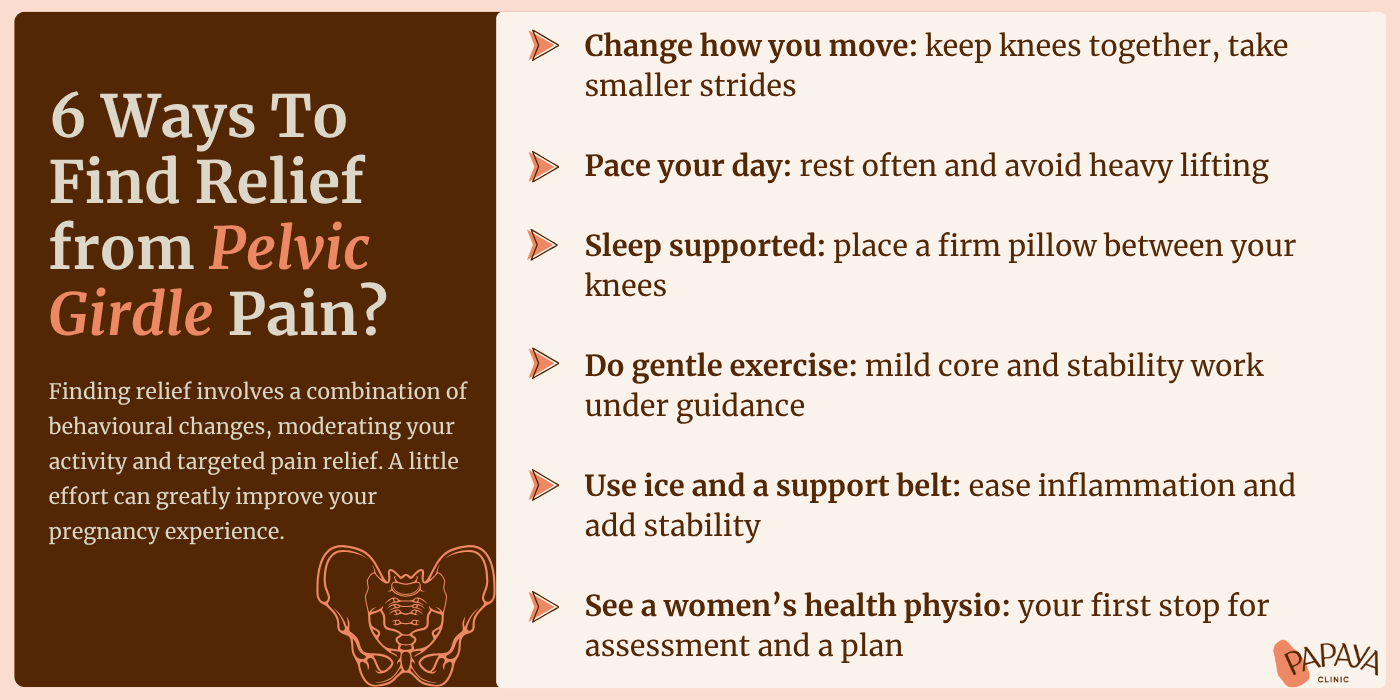
Finding relief from the pain and discomfort of PGP involves a combination of behavioural changes, moderating activity levels and targeted pain relief methods. With a small amount of effort, you can reduce the symptoms and greatly improve your pregnancy experience.
1. Change How You Move to Ease Pelvic Girdle Pain
There are various movements and daily activities that can aggravate pelvic girdle pain. Anything that creates an uneven load on the pelvis, such as standing on one leg, may cause discomfort. Try to keep your knees together when getting in and out of a car, rolling in bed, or standing up from a chair. Also, while walking, take smaller strides and slow down your pace so the movement is less aggressive, and avoid sitting cross-legged.
2. Pace Your Day to Reduce Pelvic Girdle Pain
A busy day will see you moving around in a hurry, walking quickly and being less careful when getting in and out of cars or doing other tasks. It’s important that you rest your body, take your time and don’t over-exert yourself. If you need to get larger chores done, break them into smaller tasks or have frequent rests. Also, avoid heavy lifting and things like sweeping, raking or vacuuming that require you to use a pushing or pulling motion.
3. Sleep in a Supported Position for Pelvic Girdle Pain
It’s common to wake up in the morning and feel pelvic girdle pain almost immediately. This occurs because at night people not only move around in bed, rolling over, adjusting sleep positions and crossing their legs, but the natural side-sleeping position many people adopt can aggravate the pelvis. To reduce the overnight load, it’s a good idea to sleep with some support, by placing a firm pillow between your knees and ankles while side-sleeping. You can also try a weighted blanket, as they too can help reduce movement and aid in deeper, more restorative sleep.
4. Do Gentle Exercises for Pelvic Girdle Pain
For sufferers of pelvic girdle pain, gentle exercises can help with core stability, and reduce lower back and pelvic pressure, while also improving joint flexibility.
The keys to exercising to reduce PGP are being gentle with the loading and specific with the exercises you do. Core stability workouts that are mild and primarily centred around static activation, rather than lengthening and contracting movements, can be impactful in a matter of a few weeks, assuming they’re done regularly. As with the core work, stretching should be gentle and progressively introduced into your daily routine. It’s advisable to seek the guidance of a physiotherapist when first starting any exercise or flexibility program.
5. Use Ice and a Support Belt for Pelvic Girdle Pain
To assist in the management of the discomfort of pelvic girdle pain, you can address the reduction in stability caused by the ligament softening, through wearing some external support. There are specialised pelvic girdle or sacroiliac (SI) support belts in the market that when fitted properly make a noticeable difference. Also, compression garments that support your midsection have been proven to reduce pain if worn frequently. Depending on the types or support belt and compression you use, the two can be worn at the same time for a greater impact.
Applying an icepack in areas of discomfort may also reduce inflammation and soreness, particularly the sharp, burning, or acute joint inflammation associated with pelvic girdle pain. Common areas of soreness include around the pubic symphysis or sacroiliac joints, where an icepack applied for 15-20minutes at a time can ease the pain.
6. See a Women’s Health Physio for Pelvic Girdle Pain
Working with a women's health physiotherapist should be your first stop if you start to experience pelvic girdle pain. In fact, it’s advisable to start working with one from early on in your pregnancy, regardless of any issues, as they can advise on preventative measures and build your strength and stability in a controlled and progressive manner that evolves as your body does too.
A women’s health physiotherapist is best placed to assess your posture, provide manual therapy if necessary, and recommend a pelvic support belt. They are also able to guide you through safe strengthening exercises and create an ongoing program that you can either do in your own time or under their supervision. Some clinics may also offer suitable group classes that are specific to not only women’s wellbeing, but pregnancy and pelvic health.