

8 Common Signs of An Unhealthy Gut
Some of the common signs of an unhealthy gut include chronic fatigue or tiredness, digestive issues, poor sleep, skin irritation, moodiness, food intolerances, weight fluctuations and constant illness.
Gut health is one of the most important factors in sustaining our overall wellbeing. Amongst other things, maintaining the proper balance and activity of microorganisms (your gut microbiome) is necessary for the maintenance of good mental health, proper digestion, a robust immune system and efficient nutrient absorption.
Your stomach's microbiome is a complex community of microorganisms (bacteria, archaea, fungi and viruses) and when they are imbalanced you have a breakdown in the normal behaviour of your digestive system. It’s easy to think that this may only lead to the occasional feeling of nausea or some discomfort. However, the implications of poor gut health are much more impactful and far reaching. This is why it’s very important to address any imbalances that might occur.
1. Irregular bowel movements
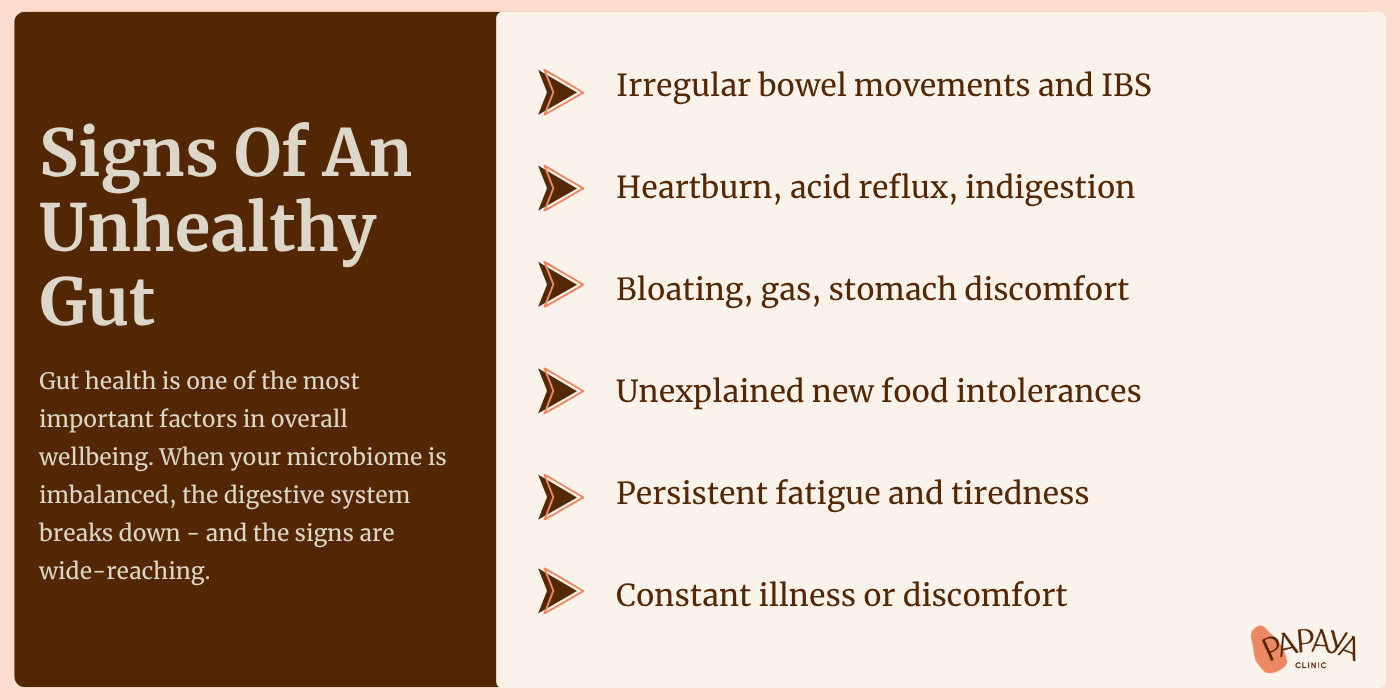
Irregular bowel movements are often caused by irritable bowel syndrome (IBS) and imbalances in the gut microbiome.
The movement of food through your body is regulated by the stomach’s nervous system and microbiome, so when there are issues with either of them it leads to abnormal bowel function. In the case of your gut microbiome, when the diverse community of bacteria in your intestines is out of whack, it can cause low-grade inflammation, which alters fluid absorption and disrupts how the intestines contract. The result can be frequent diarrhea, constant constipation, varying patterns for movements or a combination of these outcomes.
2. Heartburn, acid reflux, or indigestion
Heartburn, named so due to the burning sensation it causes in your chest, happens when stomach acid flows back up into your oesophagus.
It occurs when the muscle ring that keeps your stomach contents in place relaxes too much. It often happens after consuming spicy or acidic foods, chocolate, caffeine and alcohol, particularly if you eat large meals or if you lay down immediately after eating. Acid reflux is essentially what causes heartburn.
Indigestion is a little different to acid reflux and the resulting feeling of heartburn, in that it not only can cause that burning feeling in your chest, but also abdominal pain and a feeling of being full while eating or long after consuming food. A key thing heartburn, acid reflux and indigestion all have in common is that poor gut health is a leading cause.
3. Skin conditions (acne, eczema, psoriasis, rashes)
Poor gut health has been linked to common skin conditions like acne, eczema, psoriasis and rashes.
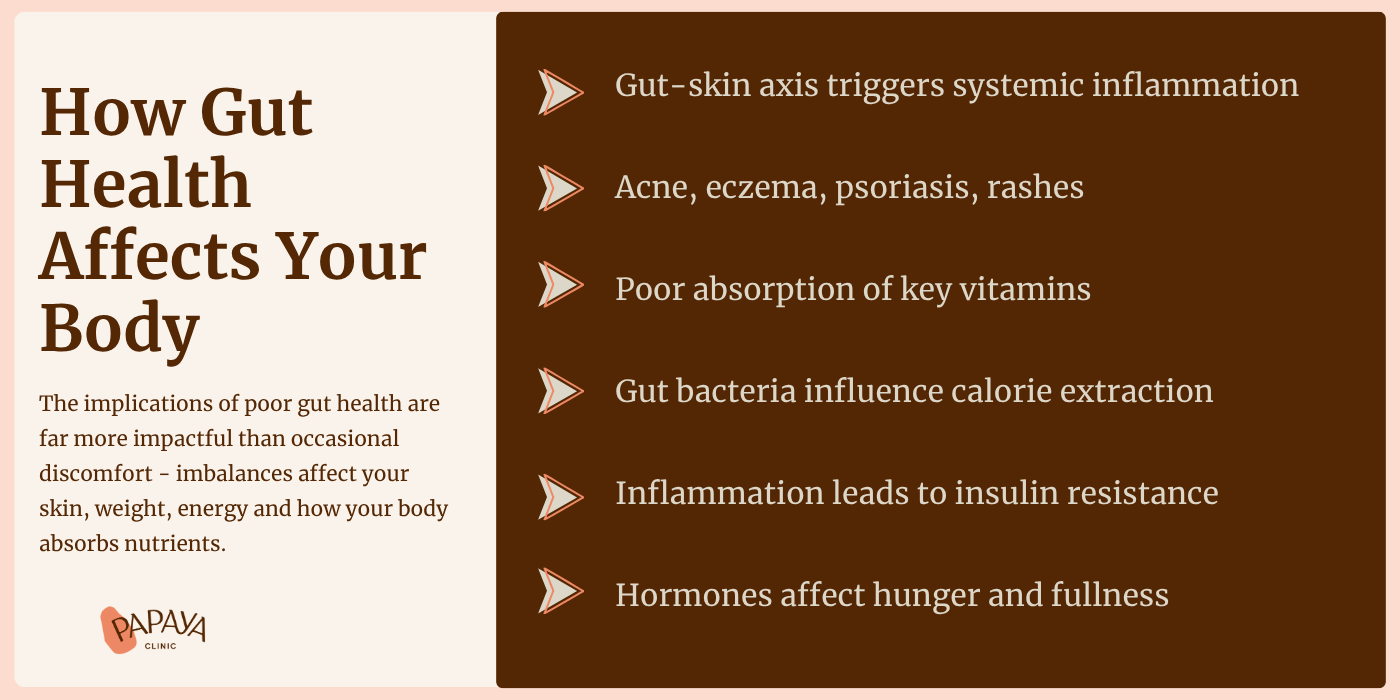
There’s a two-way connection between your skin and digestive tract, known as the gut-skin axis. When there are imbalances in your gut microbiome it leads to systemic inflammation and immune responses. Also, a compromised gut will have issues absorbing key skin-loving vitamins like vitamins A, D, E, and B-complex and important minerals like zinc, which is essential for skin cell turnover and wound healing. Therefore, the outcome of poor gut health can manifest in skin conditions including acne, eczema, psoriasis and rashes.
4. Unexplained food intolerances
You may have spent a lifetime enjoying particular foods, only to one day be out at dinner with friends and discover your favourite meal is now causing you nausea or indigestion. It’s one of the unfortunate realities of having a breakdown in gut health. That delicious curry or hearty stew that once brought you and your tastebuds so much joy has now become a burden your stomach can’t bear.
5. Persistent fatigue/tiredness
There are times in life when stress, being busy or more physically active than normal, will cause you to feel tireder than usual. But when this fatigue persists or occurs for seemingly no reason at all, you can start to consider that quite possibly you have a gut health issue. Tiredness can lead to broader physical and mental health issues, so if you find yourself chronically low on energy, it’s wise to explore the potential you have an imbalance in your gut microbiome.
6. Bloating, gas, and stomach discomfort
A result of poor gut health is that you become less capable of digesting food properly, an outcome of which can be an excess of gas building up in your digestive tract. The gas is created by the bacteria in your gut fermenting the food you consume, but not adequately digesting it. This is what causes a feeling of bloat and stomach discomfort. A once-off occurrence may be from simply being unwell or eating a new cuisine, but frequent bloating, gas and stomach discomfort is symptomatic of an imbalance in your gut microbiome.
7. Weight fluctuations and bloating
You should be able to maintain your bodyweight while consuming a consistent, healthy calorie intake and having adequate daily physical activity. However, if you have an unhealthy gut, this may not be the case.
How Gut Health Influences Weight:
Calorie Intake: Certain gut bacteria are highly effective at breaking down food and extracting calories. People with poor gut health and gaining weight often have different microbial compositions that extract more calories from identical foods when compared to someone with a healthy microbiome.
Inflammation & Insulin: An unhealthy gut can permit toxins to slip through the gut lining and into your bloodstream. This may cause chronic inflammation, which subsequently leads to insulin resistance and makes weight loss much harder.
Hormone Signalling: Your gut bacteria communicates directly with your brain, affecting the hormones (leptin and ghrelin) which determine how hungry or full you feel. They are called satiety regulators and when they act incorrectly you can feel hungry when you shouldn’t, and at times, even feel full when in actual fact you need to eat.
8. Changes to mood and mental wellbeing
The negative outcomes of poor gut health have a big impact on your mood and mental health. The symptoms mentioned above all create a negative state of mind. No one likes to feel tired and sore or carry constant inflammation or stomach irritation. What’s more, due to the gut-brain axis, an unhealthy gut impacts the production of the feel-good hormone, serotonin, and can cause increased anxiety, depression and stress.
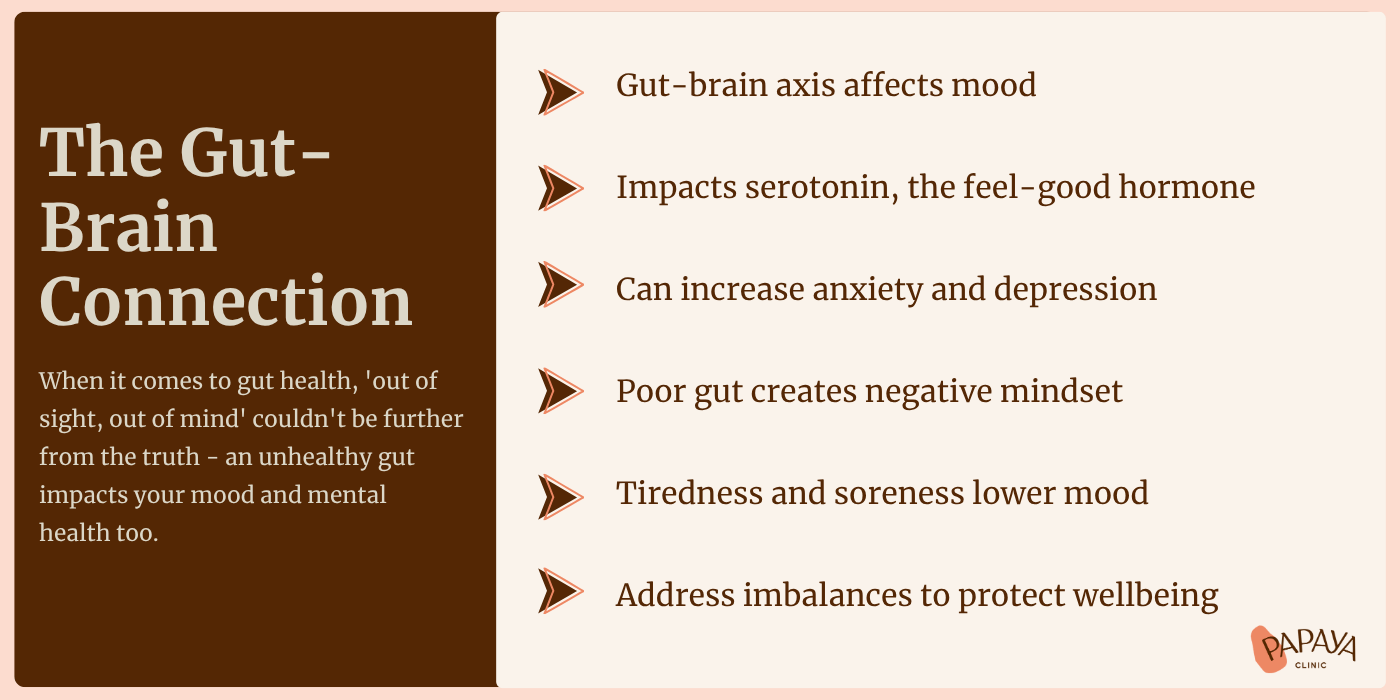
When it comes to gut health, the saying ‘Out of sight, out of mind’ couldn’t be further from the truth. You may not be able to see what’s going on in your stomach, but the impacts of gut health impact not only your body, but your mental health too.