Why Menopause Causes Brain Fog & What Helps
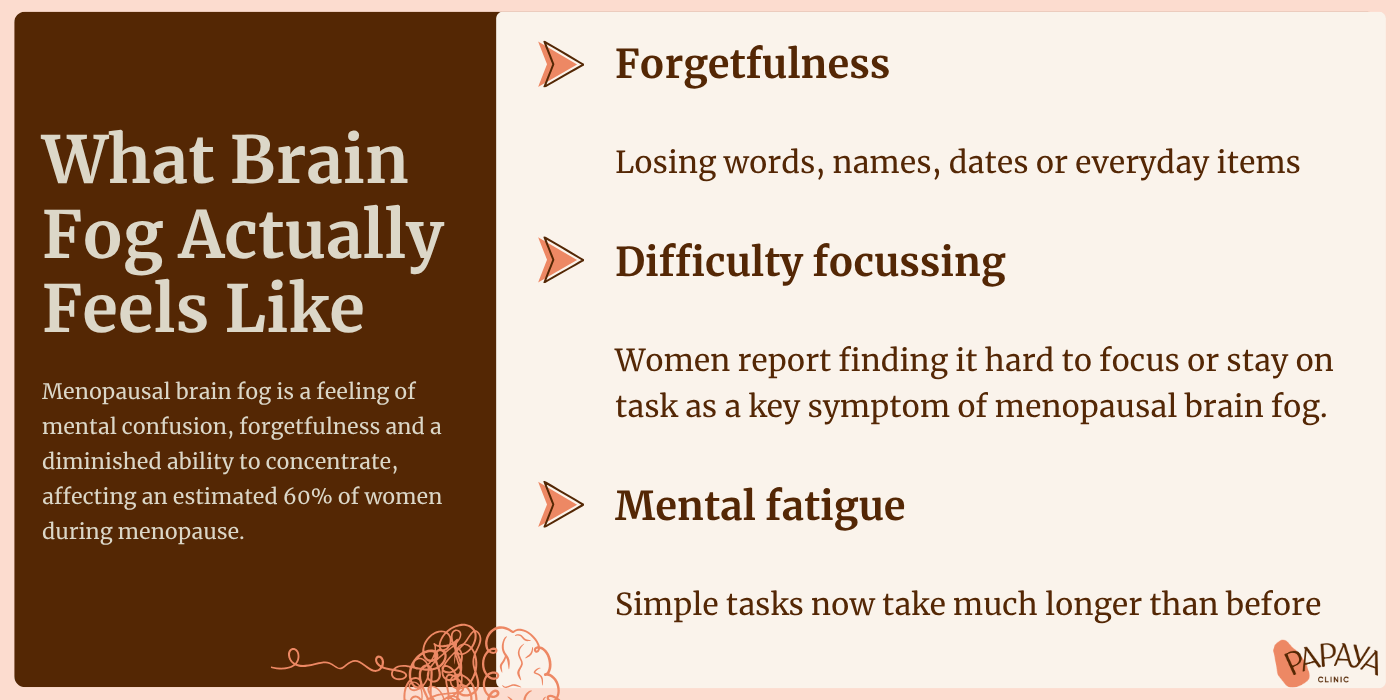
It is estimated that 60% of women report feeling brain fog during menopause with symptoms ranging from mild cloudiness to severe difficulty remembering, concentrating, and navigating day-to-day life.
Whilst these changes can be linked to changing oestrogen levels which play a key role in regulating memory and cognitive function, it doesn’t make it any less distressing for women suffering from brain fog.
There are several ways to reduce the effects of menopause and the hormonal adjustments, including diet changes, exercise, massage, improved sleep habits and doing things that are both physically and mentally stimulating. Though as with many ailments, not everyone will respond the same and it may take time for your body to settle and your mental clarity to be restored
What Menopause Brain Fog Actually Feels Like
Menopausal brain fog is a feeling of mental confusion, forgetfulness, and a diminished ability to concentrate and think. It can manifest itself as psychological fatigue where you find yourself forgetting words, names, dates or completing seemingly simple daily activities. You may find yourself struggling to concentrate for an extended period and remain focussed on a task. Brain fog can lead to losing everyday items like car keys or misplacing things like a cup of tea. Also, tasks that once took little time, may now take much longer as the once simple now seems more complicated.
Why Menopause Causes Brain Fog
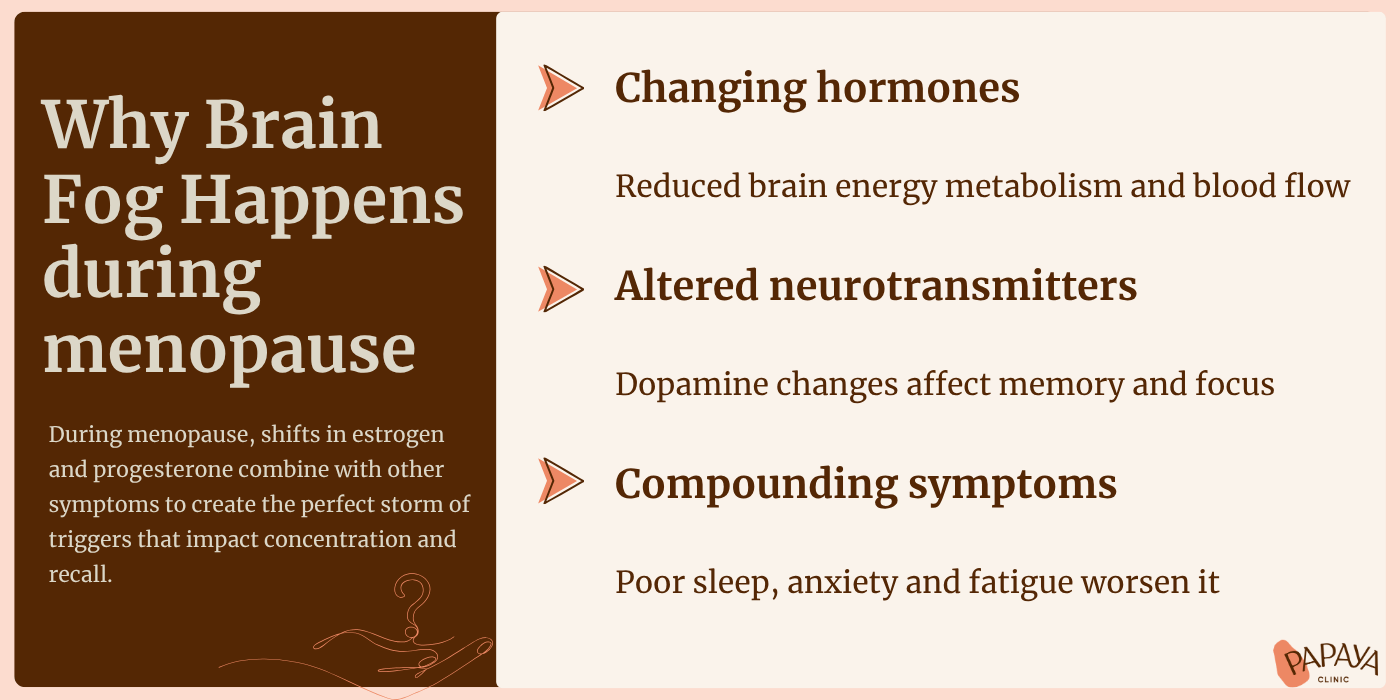
During menopause there are drops and shifts in estrogen and progesterone production. This reduces brain energy metabolism, affects blood flow, and alters neurotransmitters like dopamine that govern memory and focus.
When you add night sweats, poor sleep, anxiety and other symptoms of menopause into the mix you have not only significant hormonal changes that impact memory and concentration, but significant fatigue and stress too. It’s the perfect storm of triggers that impact concentration and recall.
Is Menopause Brain Fog Permanent?
In the vast majority of cases, menopause brain fog is not permanent. In time, as the body adjusts to the changes in hormone balance, most people start to get clarity and emerge from the clutter and haze of thought. Like the other symptoms of menopause, such as hot flushes and anxiety, the root cause of the problems are the changes in progesterone and estrogen. As the production of these hormones settles, the rest of your body returns to a state of relative normalcy, and with that comes a cessation in many of the ailments these changes cause.
What Helps Menopause Brain Fog
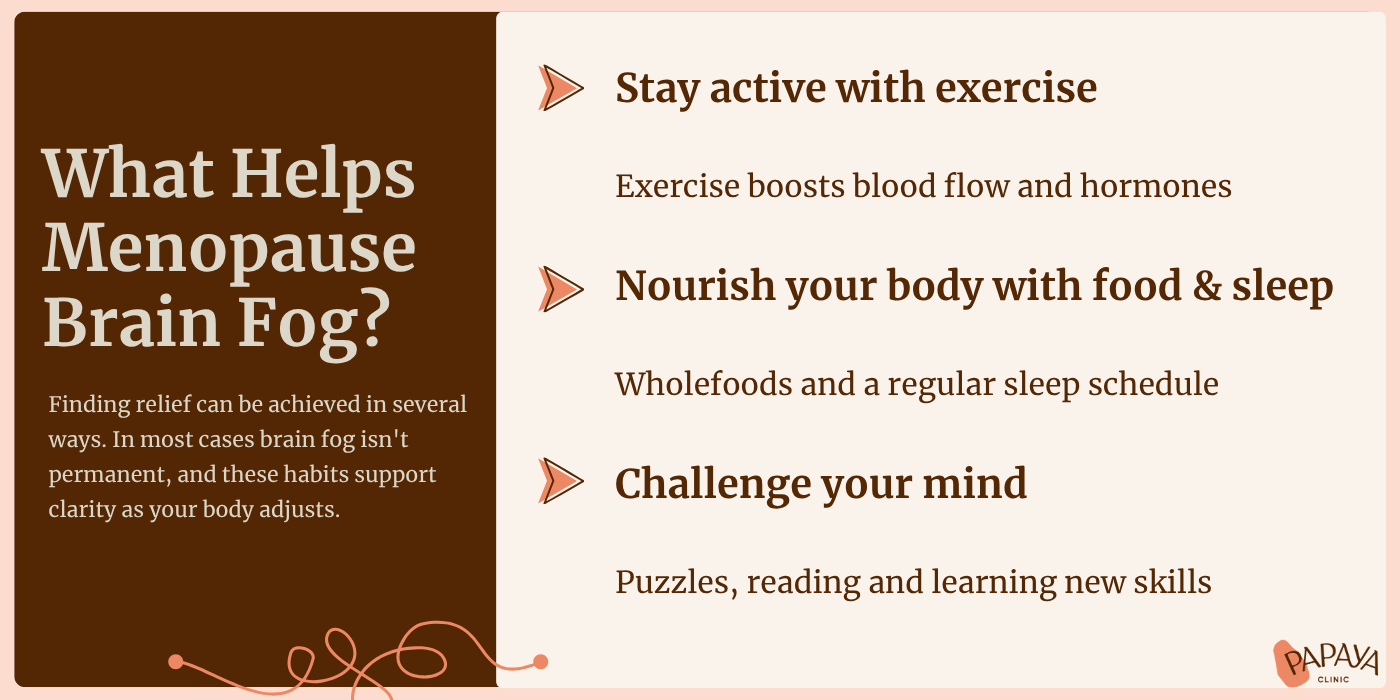
Finding relief from menopause brain fog can be achieved in several ways. To begin with, daily exercise is a great way to boost brain health and regulate hormones. Pilates, yoga and group fitness classes are all healthy ways to stimulate blood flow, increase oxygen to the brain and feel good about yourself. Acupuncture may also help, and a visit to a naturopath might also aid in finding some natural supplements to add to your daily routine.
Healthy eating is always a good idea, particularly if you follow a diet that’s full of wholefoods, minimally processed ingredients with plenty of fresh fruit and vegetables. Compliment the good diet with a regulated sleep schedule that means you get plenty of shuteye in a cool and quiet environment. Another worthwhile inclusion is to challenge your mind with puzzles, reading or learning new skills. Like all muscles, the brain needs to be used to keep it strong and working optimally.
Does HRT Improve Menopause Induced Brain Fog?
While some research has shown that HRT can help with many of the symptoms of menopause, the results are not conclusive and vary widely between individuals.
HRT works on the premise that by replacing declining hormone imbalances you can restore chemical signals and support brain cell communication. It has been shown that HRT treats other problematic menopausal symptoms such as night sweats and hot flashes, both of which directly impact sleep quality and mental clarity. So yes, there’s a chance that HRT will reduce brain fog, assuming those are the two main causes.
When to See a Doctor About Brain Fog
Brain fog can be one of those things that many of us will simply endure, finding excuses why it’s ‘only natural’ or ‘not that bad’. But there may come a time when it’s necessary to seek the advice of a medical professional. Ideally, try to implement some of the previously mentioned methods of treatment or try a menopause health program and see if things improve.
However, if you find that the brain fog comes on very suddenly, is continuing to worsen with time and is starting to inhibit your ability to carry on with daily life, then a visit to your GP might be a good idea. Similarly, if the brain fog is accompanied by other issues, such as slurred speech, loss of hearing or vision, headaches or other more serious symptoms, seek medical advice immediately to rule out the potential of something more sinister causing your ailments.